
Sometimes there is pain in enculturation.
The interview I had planned for today would be better as a
Depth of Field podcast. So, left with a blank piece of paper, or screen as the case may be, I found myself musing about last week’s guest post from author
Shiloh Lane. She ruffled a lot of feathers and, quite frankly, I was surprised by the amount of flak she took (but I don’t want to go back down that road). It reminded me that there is a big difference between travelling abroad and living abroad.
Travel photographers are often based out of their home culture. Receiving an assignment, they have to book tickets quickly, get visas, pack bags, and then, head out. After a week or two in the host culture, they head back home to the safety of the familiar. They are there long enough to see the beauty of the host culture, experience a little frustration, and remain in awe of the differences. Living overseas is quite a different story. Culture stress, or as it used to be called
culture shock, is an extremely difficult stage of living abroad, and, if truth be known, we never fully get through it.
Belonger, Insider
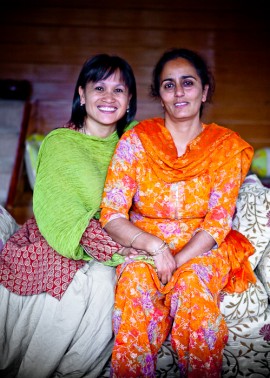
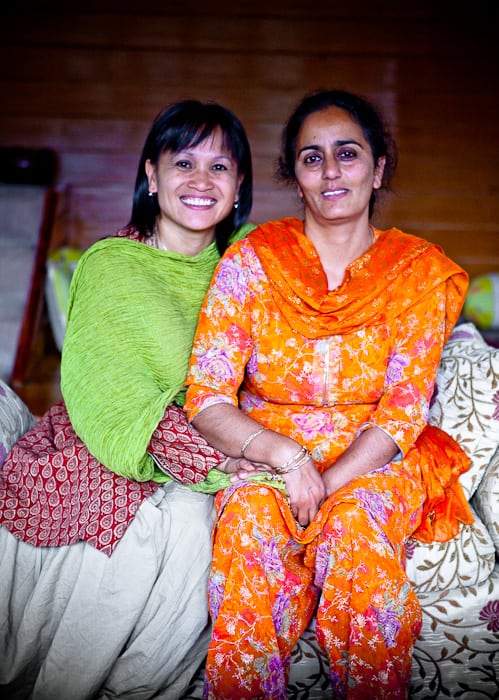
My wife (L) with her good friend in Kashmir.
Experts in the field of culture stress and culture acclimation tell us that the road to making a second culture home can take up to
two full years before you feel that sense of belonging, depending on both the expatriated visitor and willingness of the host culture to open itself to you. Not all cultures are the same, as if you didn’t know. Some are very open and accepting of foreigners, while others are very closed and may never fully accept you as a “belonger.” Often, cultures that place a high value on “sameness” and on identity make it very difficult for an outsider to ever become a belonger. Notice, I’m not using the word “insider.” As an outsider, a foreigner, it is very rare that you can become an insider in another culture. Really, the best an outsider can hope for is to be accepted as someone who belongs there.
This lines up both with my own feelings and experiences and with the extensive reading I did over many years as I tried to figure out how I could ever become an insider, or a belonger, in Kashmir. After 13 years, I came to realize that it wasn’t going to happen – but I did become accepted as their “resident outsider.” That was better than always remaining a visitor who knew nothing!
Language and more
When living in a place extremely different from your home, your first tendency is to view things that are different as “wrong.” Travellers who make quick visits abroad experience this. When you live in a place day after day, these thoughts are magnified 1000 times over! Constant stress comes from a lack of identity and control in this new place. You can’t seem to communicate. You can’t get the simplest tasks done. You feel that your whole day is spent simply surviving. Why? Because you don’t know how to communicate! What? Is it really just a problem with
language? Yes and no. The words are important, but there is more. There are all kinds of nuances such as the way people use their hands to talk or point, the way they stand or sit, the way they look (or don’t look) into other people’s eyes, and even how quickly they ask or answer a question. You may have the words down perfectly, but without understanding the nuances, you will never completely communicate like a local. Even after years and years, you may never reach that proficiency.
Kashmiri is a very difficult language to learn; it has a gazillion pronouns and other grammatical nuances. On the other hand, Bahasa Malay, the language spoken in Malaysia, is said to be one of the easiest to learn. My wife has been slowly learning Bahasa Malay. She sounds pretty good, but she is finding that there are little things that make even this “easy language” not so easy. In Malaysia, you often hear the particle “lah” used both in Bahasa and in the English that Malays speak.
What does “lah” mean? It depends, and that makes it complicated. Sometimes, it is used to mean the same as the English “of course.” Other times, it is used simply to elicit familiarity. I can’t go into all of the details, and that is sort of the point: most non-native speakers don’t know how to use it. We sound silly trying even when we are speaking Bahasa Malay. Can you imagine the frustration you must feel spending years learning a language, cultural nuances, proper dress and etiquette, and then a little word like “lah” trips you up in a way that seems to scream to everyone around you, “I am a foreigner!”
You can’t win for losing.
Sometimes, “
you can’t win for losing“. For instance, a local once told me that in Malaysia, you never put a fork in your mouth. Most Malay eat with a fork and a spoon only. They use the two utensils to tear the meat apart and then use the spoon to scoop up the rice and meat and put it all in the mouth. That is the “rule,” and yet, sitting in street-side eateries, I see locals putting both spoon and fork in their mouths when they eat. So much for that rule!
Honeymoon. Experts say, and I’ve seen this firsthand, that the first six months to a year in a new culture is often called the “honeymoon stage.” It’s a stage when things may be difficult and even confusing, but the culture is still new and exciting. You are happy to be there, and the host culture can do no wrong. The average traveller functions in this stage when visiting a new country or culture for a short period of time. When I am on photo assignments, everything is new and wonderful. I leave the country and return home with all of my wonderful memories of the place and people I just visited. I think this is a natural buffer for the next really hard phase.

My wife & I had driven 10 hrs to catch a train.
The next stage is harder and more dangerous. It usually starts six months to a year after entering a country and can take over a year to get through. You often experience frustration, anger, and even hate for the host culture. As nasty as it sounds, this is normal. What is dangerous is the possibility that your nasty attitude creates all kinds of enemies and infects everyone around you with negative thoughts and feelings about where you are living. And, it is dangerous in another way, as well; if you leave the host culture now, you leave with all the bitter feelings and negative thoughts. And, realistically, if you leave during that phase, you may never return.
This stage was very difficult for me. I lived in the stage for almost one year in India. I can remember being so frustrated with a rickshaw driver that I almost put my foot through his floorboard in anger. One time and I’m just being honest, I was so frustrated with everyone trying to push their way onto a bus while I was trying to get off that I just shoved hard with both arms and sent everyone flying. Being about a head or two taller than most Indians, I had the advantage of leverage.
Another time my wife and I had driven 10 hours from Srinagar over the mountains to the city of Jammu to catch a 12-hour train to Delhi. I was tired, I had been sick, and the weather was very hot. The train pulled up and people were clamouring to get on it even before it came to a standstill. I couldn’t believe what I was seeing! People were shouting and pushing and elbowing their way into the bogey. I managed to get inside with my suitcase in hand only to realize that my wife was not onboard. I had to force my way all the way through the bogey to the exit in the back to get down and find my wife. While trying to get out, one man shoved me a little too hard. I
snapped. I grabbed him by his shirt collar and shoved him against the side of the train. Had I not had my suitcase in my right hand, I might have punched him. Later, I found out that he had shoved me because he was a pickpocket and had stolen my Cross pen from my shirt pocket.
I tell you these stories to illustrate the brutal reality of this phase. I’m not proud of how I acted but that is the reality of that time in my life many years ago. I soon worked my way through this phase of cultural adaptation and found a more balanced view of the culture and was living in.
Observe. There are ways to make adaptation easier. The first and the best way is to learn the host language. Learning a language gives you an insight into what is happening around you. You realize that your paranoia of everyone talking about you is just that: paranoia. They are really talking about the price of bread or the latest movie. Once you get to a conversational level in the language, your frustrations quickly diminish. You calm down and you can start observing culture. And when you start observing culture you can start understanding the “why’s” of the people you’re living with, and once you start understanding the “why’s,” you can start feeling at home.
Laugh at yourself. The last thing I would say to anyone entering into a new culture is, “don’t take yourself too seriously!” Learn to laugh at yourself and your mistakes. Develop a thick skin because your host culture is going to point a finger at you and laugh. (By the way, that’s a cultural difference. In my home culture, it’s rare to find someone who will point a finger at you and to talk about you within earshot. But that is not the case in many other cultures!) Learn to laugh at your language mistakes because you’ll be making plenty of them.
I remember when I was learning Hindi, I always confused the word
sharāb with the word
peshāb. (I can hear my Hindi speaking friends laughing now!)
Sharāb is the word for wine and
peshāb for pee or piss. One day, an old beggar man came up to me asking for money. I could tell he had been drinking. I tried to ignore him but he would not go away. Finally, he wore me down and I gave him a few rupees. As I handed over the coins, I looked squarely into his bloodshot eyes and told him in my best Hindi, “
Peshāb mut ḵẖarīd na!” or
“Don’t use this to buy alcohol!“… or so I thought. What I really said was,
“Don’t use this to buy piss!” At the time, I did not understand why he gave me such a strange look.
Get off your high horse and learn to laugh at your self. Adapting to culture takes time. Most of the time you never arrive where you want to be, but you can enjoy the adventure and find a home while doing it.










Hi Matt
I also live in Penang, and I appreciate this article. I spent a year in Kuala Terengganu before we moved here and got into so many arguments with people because I wanted to use cloth bags at the grocery store–it was a security breach. I'm not sure how I was a security risk for using cloth bags, but there you are. Once or twice I was almost in tears, just because I didn't want to take 4 plastic bags! Yes, the simplest things.
Penang is a much easier place to live, least of all because I can bring my own bags any time I want! Don't get me wrong, I love living in Malaysia. Canadians can drive me just as crazy!
Lah is also commonly used in Mandarin Chinese, or at least, the mandarin as spoken here in Taiwan, and has pretty much the same meaning as you've described above.
Personally, after 6 years as a traveler, and another 7 as an expat, the worst experiences of culture shock I've had happen to me have been “reverse culture shock”. Returning to Australia after having spent a long time in Asia always gets me – it takes me a long time to readjust to western life, and even then I can't get fully comfortable in it.
Great post Matt! I've yet to live full-time in another country but I can imagine it being radically different to just viisting and I guess common sense to assume it would be. I'm planning a move to Belgrade in the next year or two so i'll found out the reality the hard way i'm sure but thankfully for me, the people there are so friendly that half the time I feel guilty for the opposite reason – I feel like an outsider and everyone just says “We don't care! Come eat with us! Come have a drink!
Havng said that, what you mention about being able to laugh at yourself is sound advice for life in general. It's important, especially as a creative, to have belief in yourself but the moment that turns into taking yourself too seriously, that's when the problems start and most of them end up being self-inflicted.
Matt,
You really nailed it here and I'm glad this content has been presented for your readers. As one living abroad now for 1 year in Turkey, and the 6 months I lived in Kashmir near you, I can really relate. I still look forward to the invisible 2 year mark. I will say “belonging” in Turkey is easier than Kashmir, but still w/o being born here AND professing ALL of their beliefs, I will never be an insider. Just knowing this, is liberating.
The most helpful thing for anyone going to live abroad is to know about these tendencies before going. It doesn't eliminate them entirely, but it helps you catch the impulses and respond with your mind and will INSTEAD OF your weakened emotions.
Thanks Matt,
I think this is first time that read a photographer's blog speaking about this culture shock. Specially from the point of view of someone living in a new culture instead of just visiting a place. Culture shock is something that we have to be aware of (exist and it will happen to you) if we pretend to be have a life in a different culture, we have to learn how to deal with it. In my case I've moved out to Iraq in 2003 and I've been raising a family abroad. The challenges seems endless. Thank you for putting a “real” perspective to this issue. I have to assume that I will always be a “resident outsider”. (Good definition by the way)
They don't even give us shopping bags anymore! Glad to know there is another Penang-ite hanging around this blog. Welcome.
The reality is I have not had any, zero, zip, culture stress since moving to Penang. Life is truly easy here compared to India. The worst reverse culture shock I had returning to America was going to Photoshop World in Las Vegas last year! That was nuts!
Thanks Heber. Always good to hear from you. Our prayers for with your family and all the people of Chile in these days ahead.
“You really nailed it here and I'm glad this content has been presented for your readers.” Thanks for your vote of confidence. I thin is this a very over looked subject with folks looking at working cross-culturally. Yet so vital.
Also, It helps us understand the international community living in our own home towns. And it helps world travelers not judge what expats experience.
Really, the advice to laugh at yourself was given to me a long time ago, and it's paid off 100 times over for good times here.
I spent a bit over a year in India, spread over three different trips, and I think that's one reason why I haven't felt any culture shock in Taiwan. Most of the things that other foreigners here complain about, I don't even notice. If I hadn't spent time in India, I don't think Taiwan would have been so easy for me.
Matt, I think that it goes both ways. Sometimes travelers don't stay long enough to see the beauty of a culture. If they don't immediately find a superficial sort of beauty, they discount a place and move on – as if a culture could be understood solely by viewing a decorative facade.
I've lived in places that were considered by the guide books to be worthy only of a quick afternoon between other destinations, and that is precisely how much time most travelers dedicated. I always found it kind of sad as there I was months and months later still uncovering ever more beautiful layers of the cultures.
Great read Matt and an important lesson. It isn't confined to overseas, I can remember the slight culture shock of moving to the south after growing up in the rural west as a youngster. Language and ways of doing things were very different and it took a while to fit in. It was easy for the other kids in my class to tell I was a Yankee not only from the accent but the way of doing things and the foods I was used to. Being sensitive to those differences and acceptance and respect of the differences go a long way to being content in a place you don't quite fit.
My wife is from Canada so the reference to 'lah' struck a chord with the Canadian 'eh'.
What a great, great post Matt! That part about buying “piss” sure made me laugh! 🙂
But honestly, these are all really great points. I've never stayed anywhere truly foreign to me as long as you, but I do like to stay for at least a few months in every new country I visit. Even in that amount of time I can relate to the range of emotions you mention here.
I feel there’s also this strange thing where although with time we are more desensitized to the stuff that initially shocks us, there’s also the chance of all the emotions becoming magnified and what we’re already supposedly desensitized to makes us blow up.
A lot of my frustration comes from riding a motorcycle in India, after riding around most of the country I pretty much know about everything I should expect, but every now and then some fragile, elderly lady with a pile of wood on her head suddenly runs onto the road without looking, and you’re going rather fast to suddenly break, somehow you dodge her, curse a few times and as your heart stops feeling like it’s going to jump out of your chest you say – that was a close one, you thank your lucky stars that no one got killed and continue as if nothing happened. I guess that's often my way of not taking things too seriously. 🙂
Hi Matt,
I've been stalking your blog for several weeks now and I wanted to say how much I enjoy it. Reading this post reminded me of some of my experiences in Hong Kong. I spent some time there as a teenager living with a family, learning some language and culture (more culture than language in my case). While it wasn't home I found an equilibrium.
Several years ago I returned to HK with my parents for a family wedding. As a gift the bride's family bought us a dinner/dancing boat tour one evening. It will filled with mostly mainland Chinese and Indians. My dad, a big man of 6 foot, tried to fix a plate at the buffet. He had never experienced the swarming of people before. He stood there, head and shoulders taller than everyone and couldn't figure out how to get to the food. I was already through my second plate when I realized he had never returned from the buffet. He didn't realize that you have to throw elbows in order to get up to the food. As a big American man the thought of doing that really bothered him.
I find the more I travel in Asia the less “shock” I feel with each visit. There are still things that grate–like the bus swarming that you experienced or drinking hot tea with hot steaming noodles when it is 100* and 90% humidity.
Jeffrey – Some people see what they want to see, no matter how long they stay at a place. But this post was less about seeing beauty, it was more about going deep and experiencing the culture and that takes time.
Erica – Thanks for sharing your story. Now your dad knows why God gave us elbows!
Hello Matt,
I've been living in Japan for the past 9 years and can relate to all of the stages you mention.
I think there are a lot more though once you live abroad long enough.
Looking back, the Frustration stage can be a real killer. It can make you or break you. The 6 months or so of feeling negative are inevitable I feel, but so long as you remain aware of the negativity stage and ride it out you should be OK.
Once you've been accepted by your adopted society another frustration faced is finding a way to contribute back. I find once you find the key to this you will be accepted a lot more.
And like you say, learning the language is key. Do that and a complete new world of opportunities (and surprises) become available to you.
Good timing Matt! I'm just about to teach this kind of stuff to young Taiwanese hoping to live abroad in the future. I agree that culture stress is a better term than culture shock. I only saw one person get into anything like shock due to a motor accident soon after they arrived. But they survived both the accident and the shock and are still here after 15 years.
I like the Outsider – Resident Outsider – Belonger – Insider categorisation and agree thta it's only a rare few (usually from closely related cultures) who get seen as Insiders. I guess I am a 'strong belonger' here in Taiwan (hey, I'm an ethnic minority in my own [nuclear] family!) and occasionally (very occasionally) colleagues forget my foreign identity or I can be mistaken for overseas Chinese in short telephone conversations with strangers but it has taken 23 years to get to this stage. Getting to proficiency in the language really helps and I would agree some cultures are more accepting of outsiders than others. The Taiwanese are very generous to most foreigners and so it really is relatively easy to live here.
There will of course be other factors that come into play such as climate, availability of facilities in the country in question (fr example, can you find a doctor you feel confident with?), which can influence. And then there are internal factors such as your own personality, your sense of identity/worth and your sense of purpose being there that can be make or break factors. So can having or developing adequate support networks.
Anyway finding the humour in your adventure as 'Alice in Wonderland' may save your head! Anyway enough for now, time to melt away in a Chesire cat grin
Andy
Andy, well spoken. I think you make some great points here. I think your idea of extenuating factors is a good one. One thing I didn't talk about was developing “coping mechanisms”. They can be things like hobbies, a sport or creating a “sanctuary” of your house or at least a room or two in your house. These coping mechanisms allow you to escape briefly and remain sane.
Indeed. A hobby either general (photography comes to mind for some reason 🙂 ) or local (some friends have enjoyed learning caligraphy, for example) can help a lot. So can just taking exercise and reasonable vacations (preferably 'in-country' for the first couple of years)
A key to satying long-term is local friendships. People you like who like you. Sometimes this may be someone who has lived in another culture, perhaps even yours, who understands a little more what you are going through – even if the culture makes it difficult to become more than a 'resident outsider' it can make all the difference if there are some folk who think of you as “my friend the 'resident outsider' “.
Belongers or longtime 'resident outsiders' can help you to a certain extent as well, though you probably want organise a balance to the time you spend with other expats if you plan to stay for any length of time.
Andy
Matt…this will become a classic for anyone wanting to truly understand other cultures. Thanks so much for taking the time to hash this out.
gary
Matt, your transparency is inspiring as always. Living in another culture can be exhilarating at times, but then other times you feel like you are literally drowning. I remember days in Delhi walking around just wishing someone would do something so I could get in a shouting match (or worse) with them. Luckily that only happened a couple times. 🙂 It's interesting that no matter how much you know ahead of time or try to “prepare” for culture stress, it is still something you have to slog through. Also, I know for me it wasn't like I moved through the stages sequentially: one day I felt like an insider, the next day a total loser. We weren't there nearly as long as you guys, but i am guessing it's not like you ever “arrive” but maybe eventually have more “insider” days than “loser” days.
Matt, I loved your blog today! A long time ago I told my Mexican neighbors that I was cooking them “polvo” (dirt) for Thanksgiving dinner, instead of “pavo” (turkey). They gave me many worried looks until I put the food on the table, and THEN they told me of my mistake!! I can't even describe how many language errors I've made in Iraq, but maybe one day I'll write a book about them…hahaha
Thanks Matt for giving a reality check to anyone interested in doing a long term project in a different culture. India especially is a land of many cultures. So a person of South Indian origin will also get a culture shock when he settles down in North India or vice-versa.
BTW, I love your podcasts.
Really good post Matt. Well worth the read for anyone doing this type of work or traveling in general. The best advice you give is “Laugh at yourself” especially when you find yourself in an awkward situation. It happens to me a lot!
Anyway thanks for taking the time to post such great insight.
Earl