

Exposed: Anticipating the Shot
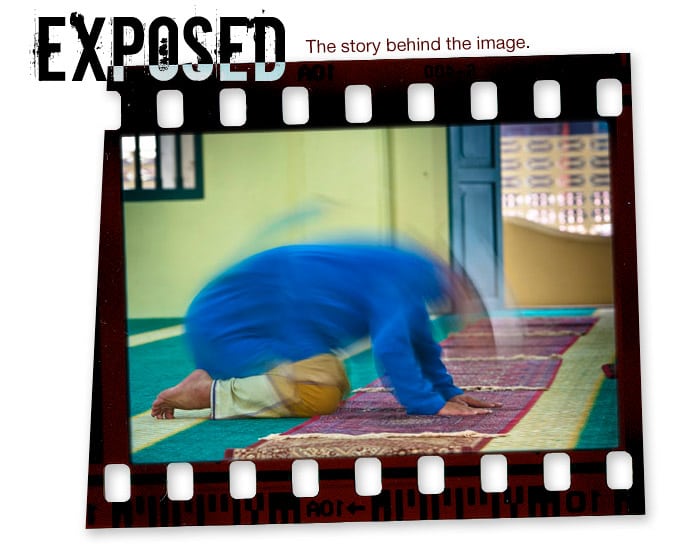
This post is not so much about the story behind the image above, but about the “how” behind the image. I have been thinking a bit about what it takes to see “the image” before hand. I am not talking about telepathy. What I mean is when you go into a location to shoot, or when you shoot a given subject is there a difference between the familiar and the new? Of course there is. I was reminded about this after this past weekend. Our photo walk took us to many Chinese temples and neighborhoods where I struggled to see the shot. Well, not so much struggled to see the shot as struggled to anticipate the shot. This is the point; anticipating. Later, near the end of the walk I found myself kneeling next too a mosque door and knowing what to shoot and when to shoot. Thus the above image.
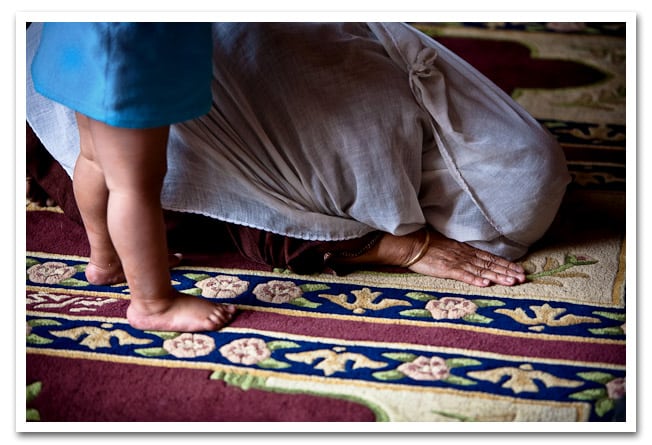
It’s about the moment. The blink of the eye, the millisecond of the shutter. As Henri Cartier-Bresson wrote “There is nothing in this world that does not have a decisive moment.” The more we are familiar with our surroundings, the more we stay a few seconds ahead of our subject and anticipate the next action or move, the better our image will be. We can prepare for the precise moment, at least to some degree.
I have lived in Penang, Malaysia for just over a year. Over this time I have spent far too much time in my office working on NGO projects and not enough time in the streets with the people of this place. I have visited a few of the Chinese temples in the area and have learned a few things about the culture, but still woefully short of my knowledge of Islam. About now, you might be wondering why this is important? Knowledge of who, what and where you are shooting is key to anticipating the shot. Here’s how it works.
You know people. You know that when you raise a camera to their face they will most likely either smile or turn their head away. In Asia there are a few well chosen poses that you might receive. If you are observing to men arguing and getting into each others face, you know from experience that one of them, if it keeps going, might put his finger in the others face or even push the other. You can anticipate it because you know your culture and how it works. So you get your camera ready. (Here is where you need to know your gear. Quickly adjust your f/stop your speed and know your lens choice. Be ready.) But, what about other cultures?
I have lived in and among Muslims for over 15 years. For instance, I know that there are several “raka-ahs” in the namaz or several rounds or rotations of the prayer form. I know the hands come to the ears in Sunni prayers at the start and don’t in Shia prayers. I know that there is a long pause at several places in the raka-ah. I know that their head is coming to the floor and that all worshipers are going to stand shoulders to shoulder and that later they will touch the floor with their forehead. At one point at the end of the pray the participant will look to the left then the right and then the prayer will be over. “Ok, so what?”, you say. “So you know a little about Muslim namaz, who cares?” It matters because I know when to take the shot. I can anticipate the next move. All these serve to give me cues to what is happening next.
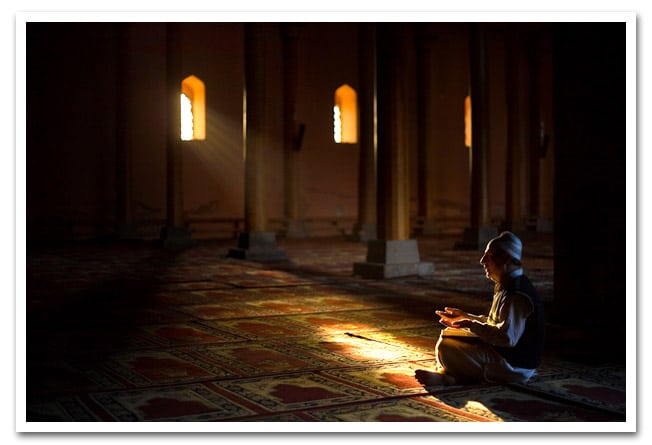
Even in the image above, I anticipated the shot. I knew the mosque, the weather and the direction of the sun. I even knew that in the cold the men in the mosque would find some sun light to sit in to pray to stay warm. So, after namaz, I waited in anticipation for this moment and it happened. I was ready.
Here is the difference not knowing the culture can make. I can’t tell you how many great shots in Buddhist temples I have missed by seconds, because I could not anticipate the next move. I don’t know the buddhist forms of worship and I miss the cues. This goes beyond just forms of worship, it applies to culture in general. I am not saying without detailed knowledge like this you cannot get a good image. No, you certainly can. But you are more likely to get that image if you are ready. We need to be students of the culture we are shooting in and even more so of the one we live in. All this to say, it serves the photographer well to understand the culture and the environment he or she is photographing in. The more understanding the better. Be ready for that decisive moment.


Great post Matt. In many ways, I think that this is what Capa meant when he said “If the photo isn’t good enough, it’s because you’re not close enough.” I don’t think he meant physical proximity as much as the importance of understanding and having a connection.
Most of the time I anticipate the shot, even if do not have camera in my hand, but the some kind of fear takes over and I miss. I hope I will overcome fear of strangers one day.
Jeffrey, good point. I haven’t read HCB book, but I bet he goes into more detail about what he meant.
Karthi, read a few of my back post on the subject of fear and how to approach strangers. Basically it comes down to big…ah big…er..guts.
Great post Matt, I don’t think travel photographers can necessarily be great in all cultures. The more knowledge and empathy we have for the culture and people around us the more we can articulate what we want to say in our images. I find that the more I can learn about a place the more I can understand what’s happening in front of me and know when I need to be looking through the viewfinder, and when I just need to sit back and enjoy the experience.
I really enjoyed this post, as well as the images. I have not been ready way too often for those moments. And, Jeffrey does have a great perspective. Thanks!
Great insight on this post. I can sure identify with Karthi on the fear thing. It is weird how it shows up almost every time, even after all of these years of doing it. Man…I just force myself to relate to the person on some level and then shoot away. I have only been chased/cursed or assaulted, maybe two times. People can sense when you are relating to their culture and when you are trying to “steal” something.
Gary, this is a great point: “People can sense when you are relating to their culture and when you are trying to ‘steal’ something.”
A good reminder for us all.
Great post!
I always teach that knowing your subject and being prepared goes a long way in ensuring success in photography. It’s true for cultures, and it’s true for landscapes (my subject of choice)
Great post!
I always teach that knowing your subject and being prepared goes a long way in ensuring success in photography. It’s true for cultures, and it’s true for landscapes (my subject of choice)
Thanks Matt, Next time I am going to shoot with little more guts (and with smile, that I always have) also it is good to know that I am not alone, when it comes to fear, I have Gary for a companion!
Excellent post and advice. Your mention of Buddhism immediately brought to mind something from my own experience. In the early 2000s, I spent 2 consecutive winters in Bodhgaya, India. During winter, this is pilgrimage season for Buddhists, mostly Tibetan but all other traditions and countries are well represented. My images from the second winter were a lot stronger than the first. A big reason for that was increased familiarity with the rituals and customs learned during that first winter. Increased access due to friendships made the first year also helped a lot.
Jeffrey Chapman – great idea about Capa. I’ve never thought of it liek that, but made sense immediately upon reading. Thanks.
Great post and some useful tips in the follow ups too.
Knowledge is very helpful in helping to inform our choices.
Awesome post Matt. Even though I’m a muslim, I’ve never really shot the prayer or looked for a decisive moment in the mosque but you have inspired me. Btw one more tip about namaz — probably the two biggest congregations in any muslims culture would be the prayers for Eid-ul-fitr (following the month of Ramadan) and Eid-ul-Adha (to mark the Hajj).
Keep up the great work!
Awesome images, especially the first one. Good post Matt.
Great post! I always teach that knowing your subject and being prepared goes a long way in ensuring success in photography. It's true for cultures, and it's true for landscapes (my subject of choice)
Great post!
I always teach that knowing your subject and being prepared goes a long way in ensuring success in photography. It's true for cultures, and it's true for landscapes (my subject of choice)